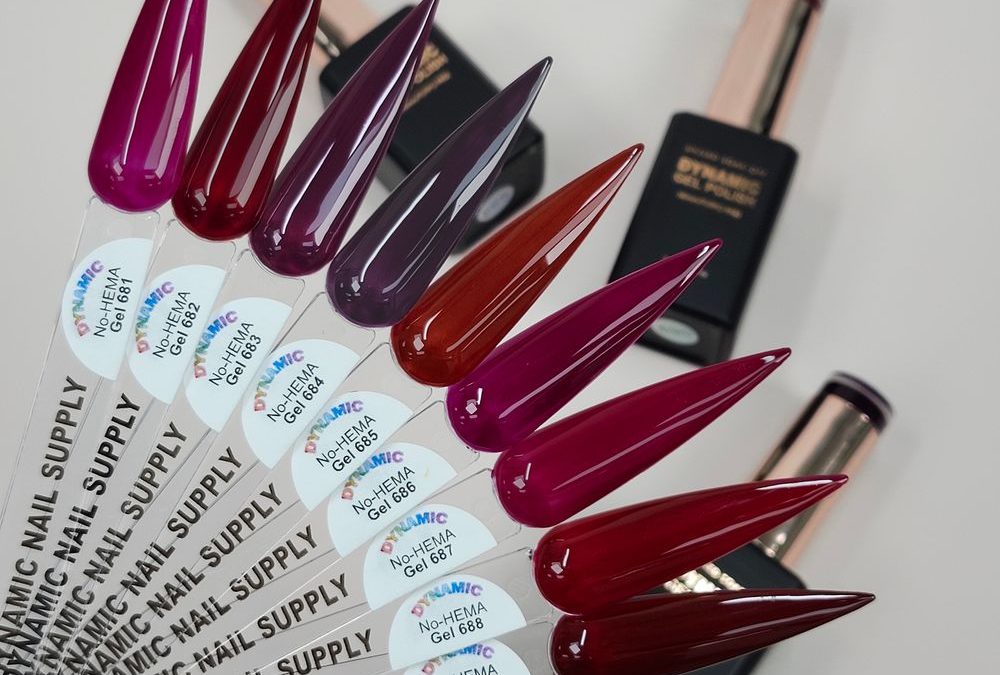
Which berry or wine tone will make your client’s hands look rested, refined and camera‑ready? We walk through questions to ask, options to suggest, and realistic expectations using the Dynamic No-HEMA Gel Polish set 681–690.
Why these berry and wine shades work for different skin tones
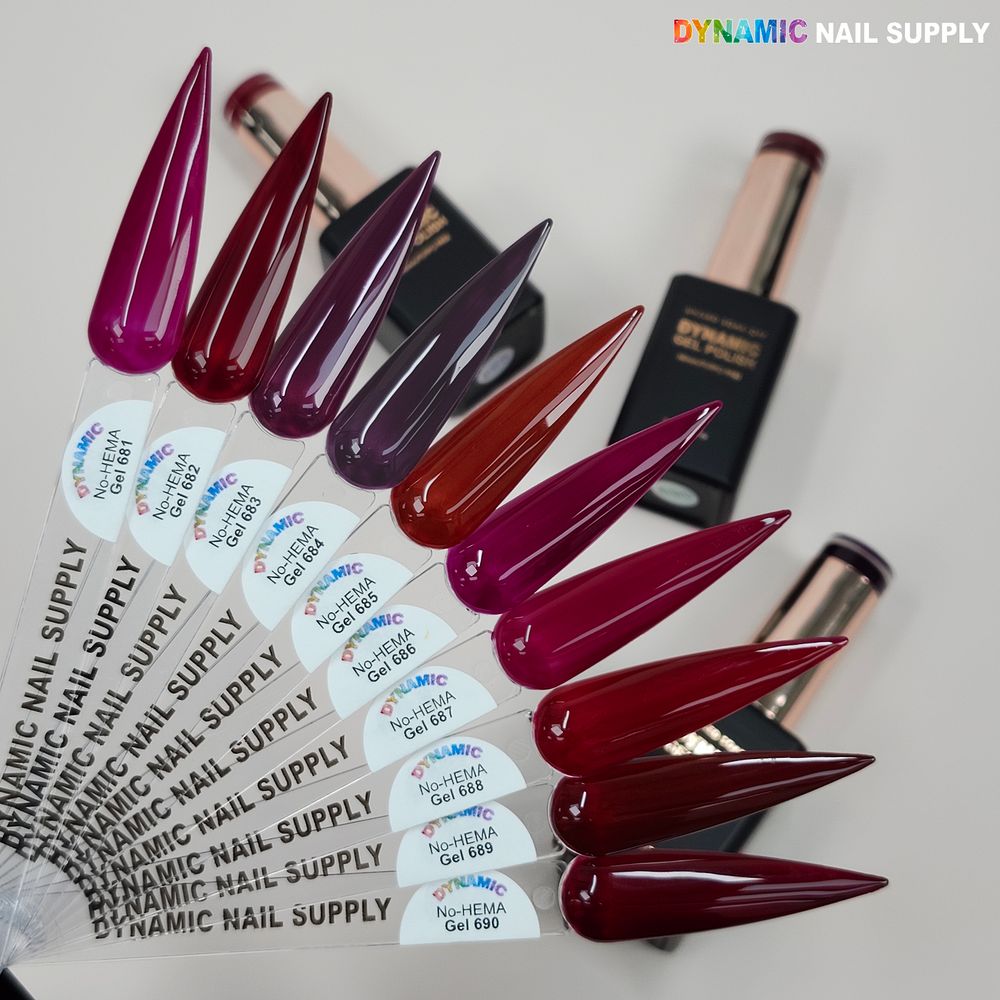
The 681–690 fall collection reads as a curated progression from bright fuchsia through vivid raspberry into deep wine and oxblood. The range leans toward cooler plums and rich reds, which changes how the same color reads on warm, cool and neutral skin tones:
- Cool undertones: plums, cool berry purples and mid‑tone raspberries will harmonize with blue veins and cooler complexion references.
- Warm undertones: warmer brick red and vivid raspberry can lift yellow or golden undertones without clashing; avoid the very coolest plums if the client wants warming effects.
- Neutral undertones: most colors in this set are versatile; recommend mid‑tones like vivid raspberry or deep burgundy to keep contrast balanced.
Pro tip: Ask the client to roll up a sleeve or view the swatches beside natural daylight when possible—these high‑gloss creams show true saturation in direct light.
What to ask during the consultation: structured prompts
A quick, consistent series of questions narrows the field fast and keeps booking times predictable. We suggest this flow:
- Service context: “Is this for everyday wear, a photoshoot, or an evening event?” (Evening looks can take deeper burgundies.)
- Undertone check: “Do you see more blue or green veins, or neither?” (Blue = cool; green = warm; neither = neutral.)
- Contrast preference: “Do you want the nails to pop against skin or blend smoothly?” (High contrast points to bright fuchsia or vivid raspberry.)
- Maintenance tolerance: “How often do you come in for fills or color refreshes?” (Deep shades can show growth more quickly.)
Follow those prompts with visual options using labeled swatches so clients can point to the exact numbered color from 681 to 690.
When to suggest specific looks and how to present options
Match the color choice to the client’s wardrobe plans, skin tone, and shape preferences. Use these salon‑ready suggestions during the conversation:
- Classic full‑coverage: Alternate berry and wine shades across the hand for clients who want variety without nail art.
- Ombre: Propose a cuticle‑to‑tip ombre moving from bright fuchsia at the cuticle to deep oxblood at the tip for longer nails or evening services.
- Statement nail: Offer a single deep burgundy or maroon as a single‑tone statement for formal events.
- Two‑tone French: Suggest brick red tips over a plum base for clients who like structured design but minimal freehand work.
- Accent contrast: A vivid raspberry accent on a dark maroon hand reads modern and photogenic in product shots.
When a client hesitates, present two clear choices—one safer (mid‑tone raspberry) and one bolder (bright fuchsia)—and explain likely maintenance and wear. Prices start at $8 per bottle and may change; recommend the set when clients ask for a take‑home option to match salon results.
To show the exact bottles and swatches we reference, point them here:
https://dynamicnailsupply.com/products/dynamic-no-hema-gel-polish-color-681-to-690
Pro tip: For lighting‑sensitive clients, show a swatch on a practice tip under your salon lamp and in natural window light so they can see finish and saturation differences; these gels cure to a consistent high‑gloss cream.
When a color may need adaptation: shape, opacity and finish notes
Dark wines and oxblood read shorter on short nails; recommend elongating shapes like almond or oval if the client wants the full dramatic effect. These gels have a thick base consistency that helps achieve smooth, even coverage, so control application thickness to avoid dome effects. Cure times range 60–120 seconds under UV/LED lamps—confirm your lamp specs before booking timed services.
Cleanup expectations: high‑gloss, cream finishes hide brush strokes when applied in controlled passes; plan two thin passes for even opacity rather than one heavy coat.
Special attention: No-HEMA Gel 681
No-HEMA Gel 681 is the standout bright fuchsia in this collection. Because it’s significantly brighter than the surrounding deeper tones, we use it as a visual lift: a cuticle focal in an ombre, a bold single accent, or alternating index and ring fingers to play with contrast. During consultation, frame 681 as the “pop” option and compare it directly to a mid‑tone raspberry from the set so the client can make an informed contrast choice.
Use 681 conservatively on very warm skin that prefers warming shades—pairing it with a warmer brick tip or a neutral base keeps the look coherent.
Three final questions clients often ask
Q: How long will a color this saturated stay photo‑ready? A: With proper base, cure and topcoat, expect typical gel wear; advise clients on activities that shorten glossy life.
Q: Can I get a similar look at home? A: We recommend professional application for even coverage and proper cure; offer the set for take‑home touchups.
Q: Is this set safe for clients with sensitivities? A: These gels are HEMA‑free and formulated to reduce common sensitivity risks—continue to observe standard patch‑test and salon safety practices.