
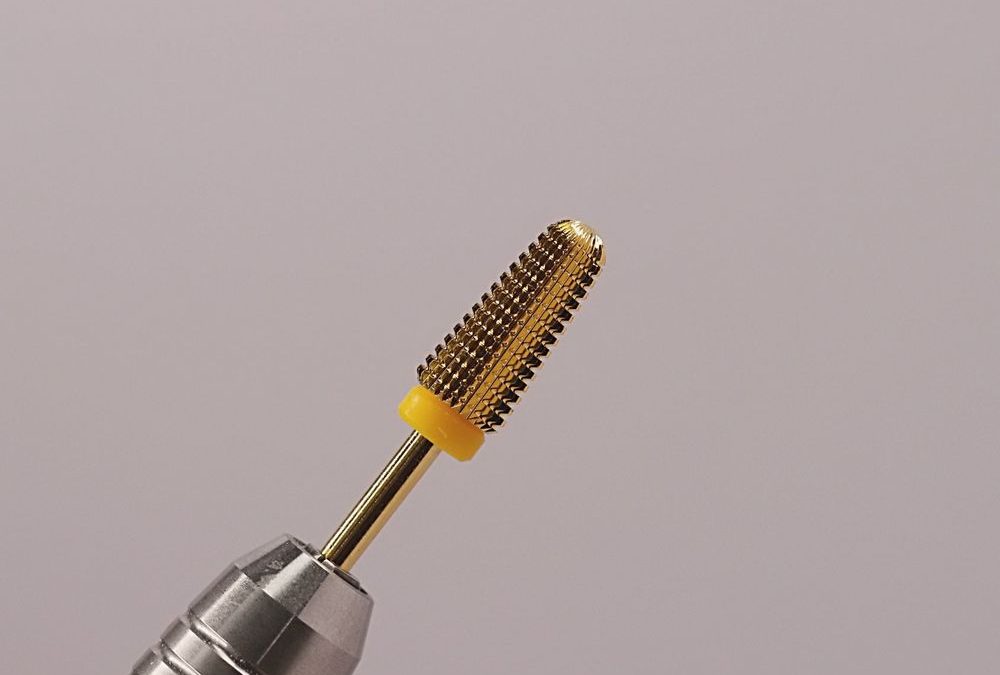
Are you preparing to refine the cuticle area on a client with acrylic enhancements and need a fast, safe consultation script? We’ll walk you through the questions to ask, the options to suggest, and a clear step-by-step technique using the gold-plated Extra ROUND (XF) 5-in-1 Volcano Bit to smooth acrylic cuticle zones efficiently.
Why this Extra ROUND (XF) Volcano Bit works for cuticle zones
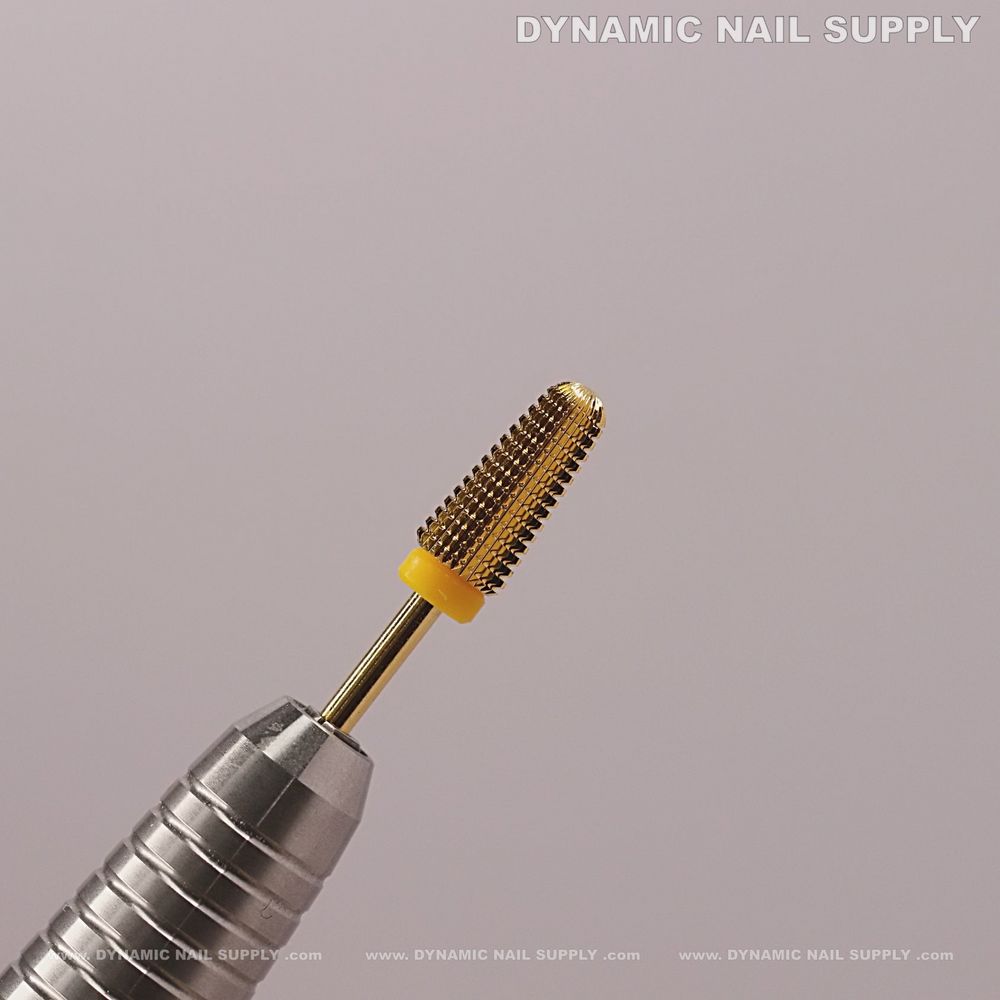
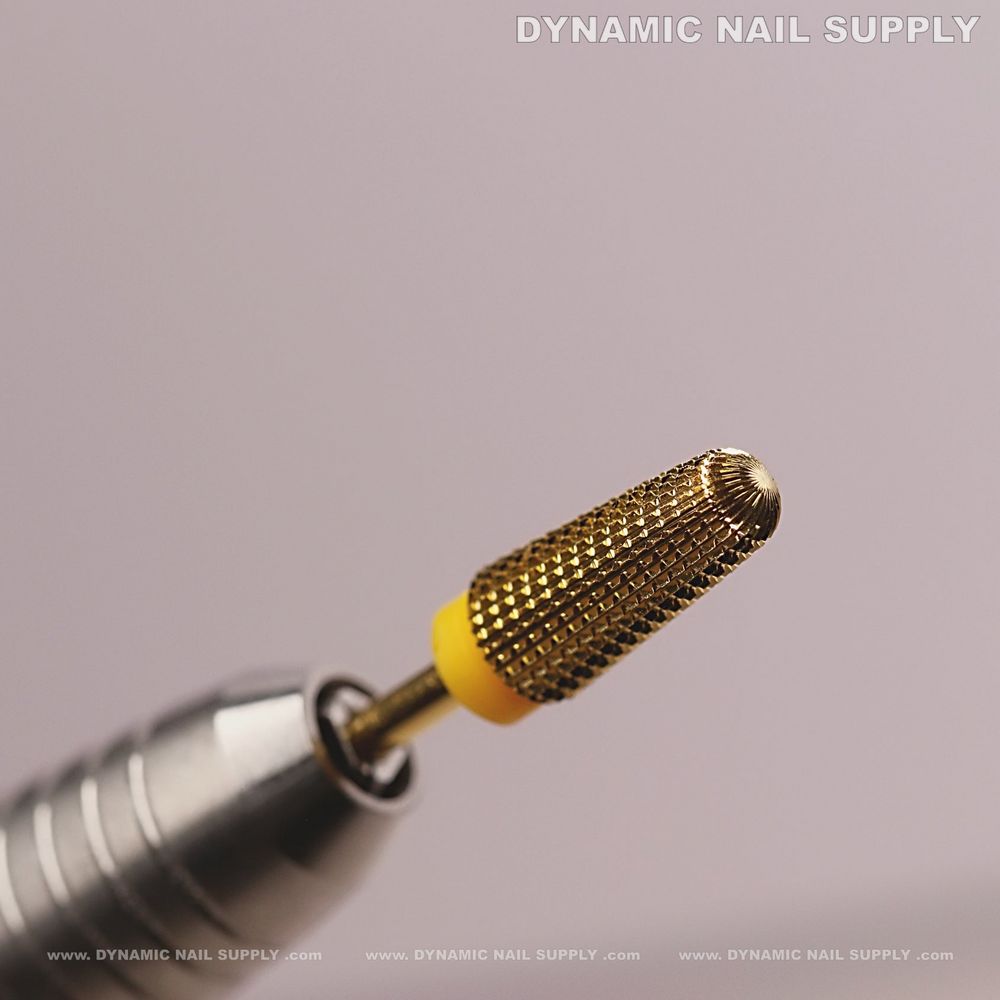
We start by explaining the tool’s visual and mechanical cues so clients understand its role. The bit’s mirror-like gold plating and very fine cross-cut teeth tell us it’s engineered for low-friction surface work. The small yellow collar behind the head is a handy color-coded reference point when mounted in a silver metal drill chuck; it shows how far the head sits from the handpiece. Use this description in consultation to set expectations about precision and minimal chatter.
Pro tip: Mention the small yellow collar as a visual safety marker while the bit is mounted — it reassures clients during a close-up cuticle pass.
What to ask the client before you begin
- Ask about recent product use: Have they had fresh fills, or was there recent lifting or repair work?
- Confirm any sensitivity: Do they have numbness, irritation, or thin skin around the nail folds?
- Discuss desired finish: Do they want a fully smooth, natural blend or a defined edge for acrylic overlays?
- Explain timing: Will you perform a quick precision pass this visit or plan for a more in-depth surface re-sculpting?
These questions let us choose how aggressive to be and which motions to use with the Extra ROUND (XF) 5-in-1 Volcano Bit to smooth acrylic cuticle zones without overworking the area.
When to use specific speeds, grip, and motions
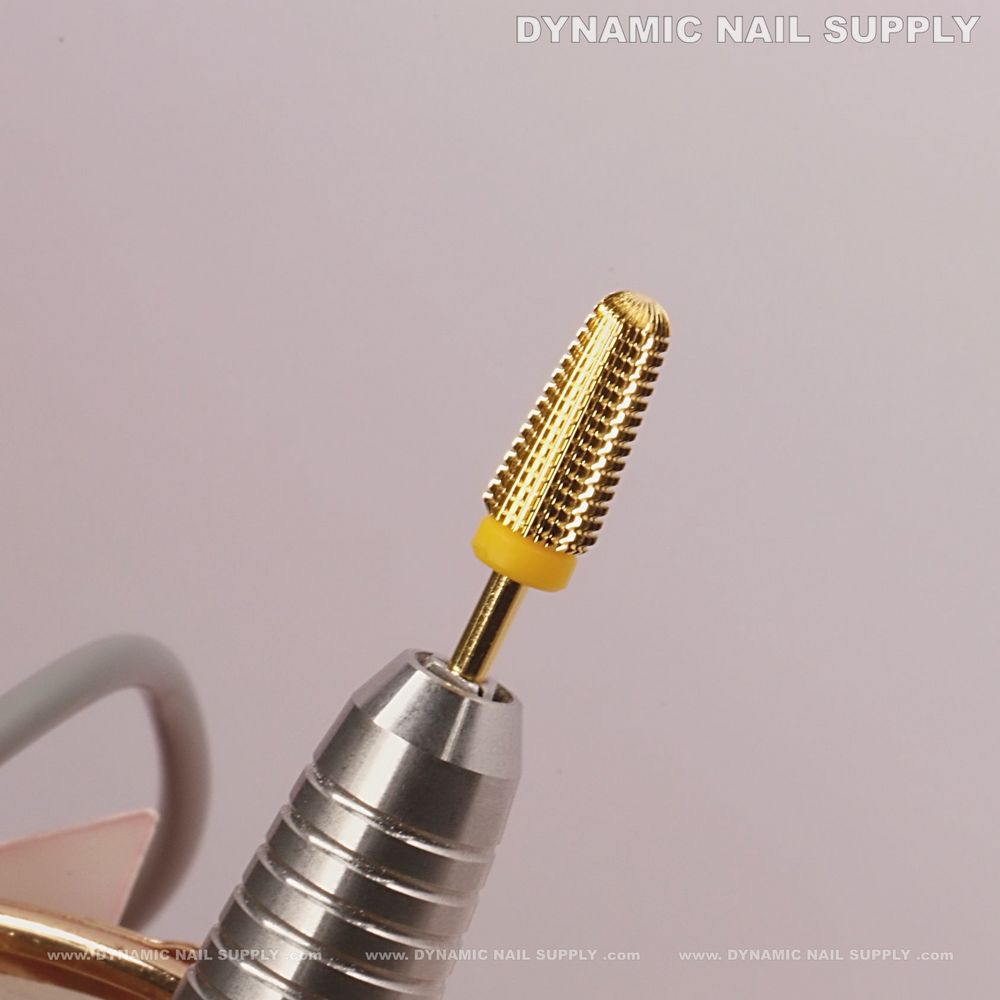
We recommend defining speed ranges and hand positioning to clients so they feel informed. With the bit shown mounted in a silver handpiece chuck, use these parameters as a baseline and adjust to the acrylic hardness and client comfort.
- Low speed (3,000–6,000 RPM): initial blend and feathering near the cuticle; this reduces heat and gives you tactile control.
- Medium speed (6,000–10,000 RPM): final smoothing of the surface ridges and light shaping when the acrylic is stable.
- Grip: hold the handpiece like a pencil, with the silver chuck visible and your index finger resting lightly for micro-adjustments. The yellow collar helps you keep the bit profile consistent at the cuticle.
- Motions: use short sweeping strokes away from the skin, always moving from heavier product toward the free edge to avoid gouging near the cuticle.
Back up this practical explanation with a product reference so the client can picture the exact tool you’ll use: https://dynamicnailsupply.com/products/extra-fine-xf-5-in-1-corn-shape-bit-easy-and-safety-to-use-for-smooth-out-acrylic-or-gel
What the step-by-step technique looks like in practice
- Preparation: Clean and dehydrate the nail plate per your salon protocol. Lightly buff the surface only if lifting or texture demands it; our goal is a minimal initial pass.
- Initial pass at low speed: Mount the Extra ROUND (XF) 5-in-1 Volcano Bit in the silver chuck. With the handpiece in pencil grip, use the bit’s extra-fine ridges to feather the product near the cuticle, using short, controlled strokes away from the skin.
- Check tactile feedback: Reduce pressure—let the bit’s machined cutting ridges do the work. If you feel chatter, lower RPMs and shorten stroke length; the fine texture reduces vibration but only if feed is light.
- Refine at medium speed: Once the transition is even, raise speed slightly and perform a single-pass finish to polish the blended area. Keep contact time brief to avoid heat buildup.
- Final inspection and hygiene: Wipe dust away with a clean brush, inspect for an even radius at the cuticle line, and apply cuticle oil or recommended aftercare.
Pro tip: Use the bit’s gold-plated head as a visual reminder of fineness—if you need heavier removal, switch to a coarser profile rather than increasing pressure.
When to adjust technique or stop
We stop or change approach if the client reports warmth or stinging, if the nail plate appears thin, or if you encounter lifted acrylic that needs full replacement. For thin nail plates, switch to non-aggressive surface work or manual files instead of prolonged drill contact. Always document the chosen approach in the client record so future visits maintain continuity.
Care, replacement cues, and safety notes
Tungsten-carbide and stainless components are durable, but monitor for rounded teeth or loss of finish. Replace the bit if cutting action softens. For safety, wear appropriate eye and dust protection and use dust extraction when possible. Keep the yellow collar free of debris so it remains a clear reference when mounting the bit.
Quick logistics
The Extra ROUND (XF) 5-in-1 Volcano Bit is sold as a small-barrel style tool designed for surface smoothing and shaping on acrylics and hard gels. Price and availability may change; check current listing for details.
Three quick FAQs
Q1: Can we use the bit directly on natural cuticle skin? A1: No; use it only on product and keep the motion away from live skin. Q2: How often should we replace this bit? A2: Replace when cutting edges feel rounded or produce more dust and heat. Q3: Will this bit reduce chatter? A3: Yes, its extra-fine machined ridges are intended to minimize vibration when used with light pressure and correct RPM.